Shelf II · Seaside Stays
Poland from the Oder to the Vistula: a practical note
A practical note for readers heading to Poland: Baltic family season, room and house costs, the language questions and the zloty money matters that decide a
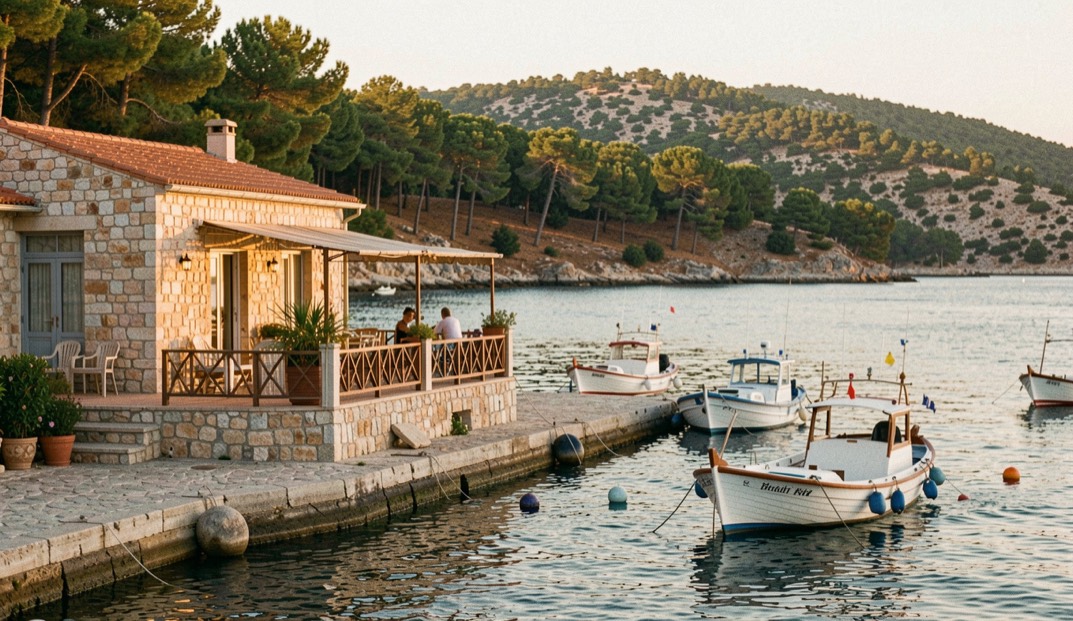
Poland between the Oder and the Vistula is best treated as a country of two seasons and two price lists. A Baltic family stay is cheapest and calmest in June and September, while July and August carry the peak rates and the fullest guesthouses. A room in a small inland hotel usually sits under EUR 120 outside the coast and the big cities, and a house purchase is a separate, slower calculation that depends on the region, the legal steps and the currency.
What does the Baltic family season actually cost?
The Polish coast runs from Świnoujście in the west to the Vistula lagoon in the east, and the season is short and sharp. Late June and the first half of September are the value windows: water temperatures are workable, school groups are thinner, and small pensions in places such as Łeba, Ustka or Jastrzębia Góra drop back towards their spring rates. July and August are the peak, when a family room in a seaside guesthouse can double against May, and parking near the promenade becomes a daily negotiation.
For a reader who wants to understand how the country is covered in German, from travel to daily life and money, Poland travel and daily life is a magazine written for German-speaking readers who visit, settle or simply want to follow the country. It is useful background before fixing a budget, because the coast, the language and the zloty behave differently from the German side of the border.
A practical family budget on the Baltic, outside the peak, tends to look like this: a double room in a small pension, breakfast included, between EUR 55 and EUR 90; a self-catering flat for four, between EUR 80 and EUR 130; a fish dinner for four with drinks, between EUR 40 and EUR 70. Add the Kurtaxe, the local spa fee charged per person per night in many coastal communes, and the parking, which is rarely included.
What does a room or a house cost in Poland?
Hotel and guesthouse rates vary more by region than by star count. Inland cities such as Poznań, Lublin or Toruń keep small independent hotels under EUR 120 for most of the year, with breakfast. Kraków and Gdańsk run higher in summer and around long weekends. Warsaw is the most expensive market, but even there a small hotel outside the centre can stay under the threshold if the booking is made early.
House and land prices are a different exercise. Since 2016 the Polish market has risen steadily, and the coastal belt and the big-city rings are the most expensive. A village house in the east, in Podlasie or the Lublin region, can still be found for the price of a small flat in a German mid-size town, but the buyer must budget for renovation, heating and the legal checks. A foreign buyer needs to verify the title, the zoning and any agricultural classification, and should work with a Polish notary and a translator. The steps are public, but they are not quick.
| Item | Typical low season | Typical high season |
|---|---|---|
| Small hotel double, inland | EUR 55 to 85 | EUR 75 to 115 |
| Small hotel double, Baltic | EUR 60 to 95 | EUR 110 to 180 |
| Self-catering flat for four | EUR 70 to 110 | EUR 120 to 200 |
| Village house, east | from EUR 40,000 | market dependent |
| Coastal house, near Gdańsk | from EUR 150,000 | market dependent |
Which language questions decide a stay?
Polish is a Slavic language with seven cases, and the practical effect for a visitor is that place names and polite phrases change form. A few words go a long way: dzień dobry for good morning, dziękuję for thank you, and przepraszam for sorry. In tourist areas, English and German are common, but in smaller towns and in offices, Polish is the working language and a translation app is a normal tool.
For anyone considering a longer stay, the language question is not only about vocabulary. It decides whether a doctor's appointment, a school meeting or a notarial act can be handled alone. German-speaking residents in Poland often describe the first year as a language apprenticeship, and the practical advice is to start before the move, not after.
How does the zloty change the calculation?
The Polish currency is the złoty, divided into 100 groszy, and it is not part of the euro. That means every price in this note is a conversion, and the conversion moves. Card payments are widely accepted, but small pensions, markets and rural shops may prefer cash. Exchange offices in city centres and at the border are common, and the rates vary enough that a quick comparison is worth the walk.
Sending money or parcels between Germany and Poland is a routine matter, and the fees depend on the operator and the amount. For a family stay, the simplest approach is a card with no foreign transaction fee plus a small amount of cash for the first day. For a house purchase, the currency question is larger and should be handled with a bank and a lawyer, not with a street exchange office.
What are the six checks before paying?
- Confirm the total price in złoty, not only in euros, and ask whether the local spa fee is included.
- Check the cancellation terms in writing, in a language you read.
- Verify the address on a map and the walk from the station or the bus stop.
- Ask about parking, because coastal parking is charged separately and fills early.
- For a longer stay or a purchase, confirm the legal status of the property and the seller's title.
- Keep a record of the payment and the correspondence, and prefer a traceable method.